
- Legendary reliability, dealer support and parts availability
- High-tech, well-made interior
- Loaded with standard equipment
- Ride quality in heavy-duty model is rough
- Prices rises!
- Is it really a new model?
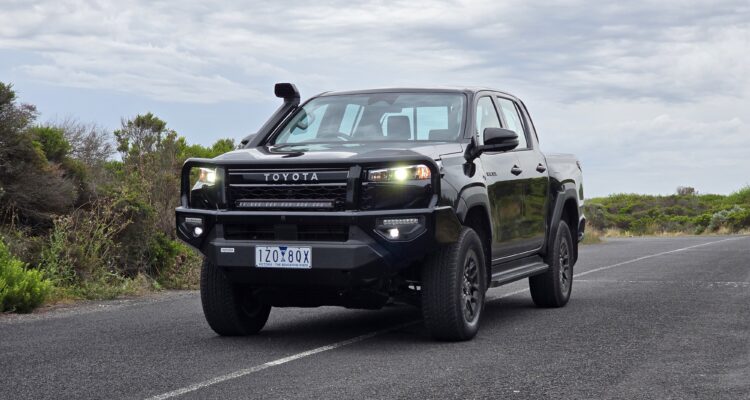
Ah, yes. The evergreen Toyota HiLux. It’s a vehicle that practically owns the top spot of local sales charts and lives rent-free in the minds of Aussie tradies. Landing in local showrooms with a heavily overhauled package, the 2026 Toyota HiLux has arrived with a fresh look, a massive injection of tech, and an even bigger reputation to uphold.
By now, you’ve likely seen the headlines, caught a glimpse of it on the tools, and probably jumped to a few conclusions. Because underneath the skin, it’s an evolutionary step rather than a clean-sheet, ground-up rebuild like the high-tech Kia Tasman or the plug-in hybrid BYD Shark 6.
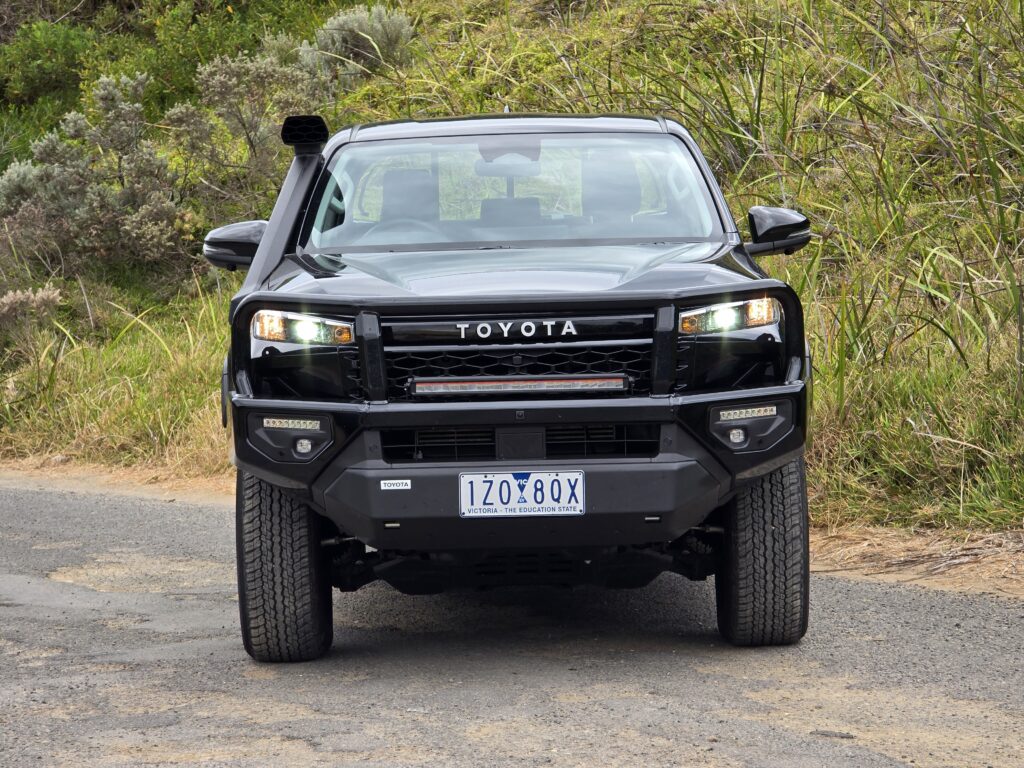
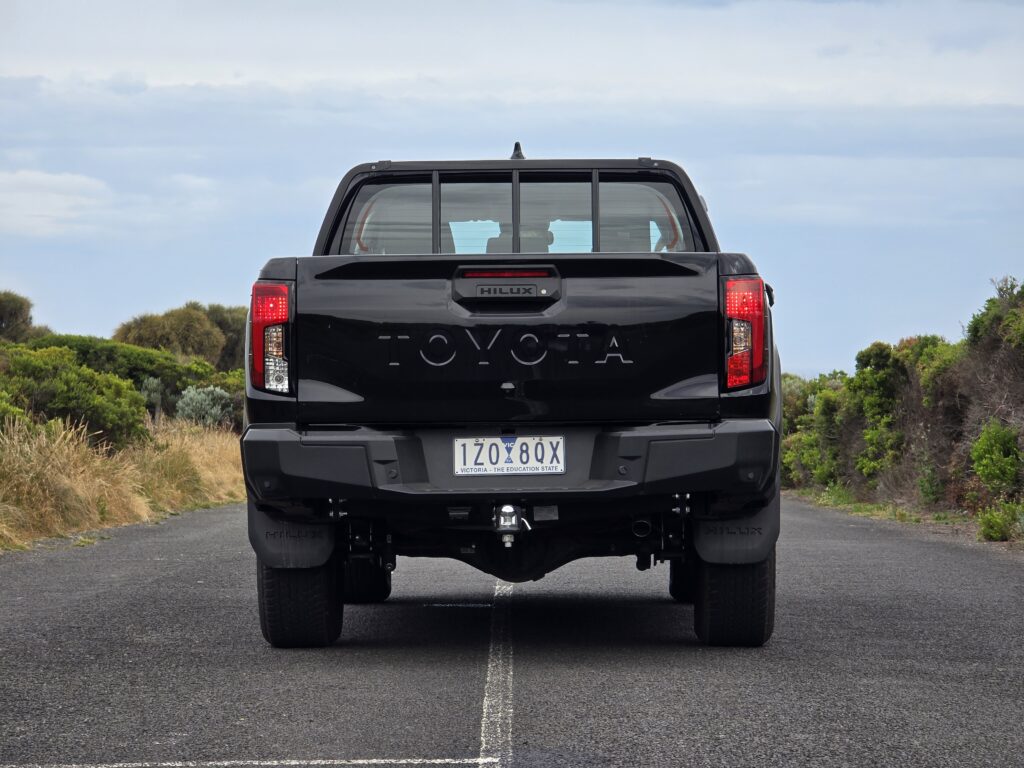
It sticks resolutely to a trusted blueprint, retaining the exact same wheelbase, core cabin cell, power outputs, and part-time 4×4 layout as the model it replaces. Toyota knows exactly what its buyers want, and it wasn’t about to throw the baby out with the bathwater.
Instead, the Japanese giant has focused on dragging the HiLux into the modern era where it matters most. There’s a completely redesigned cabin, an influx of essential screen real estate, a more aggressive face, and crucial mechanical updates like electronic power steering and a revised suspension setup. Under the bonnet, the ubiquitous 2.8-litre turbo-diesel four-cylinder lives on, now packing 48V ‘V-Active’ mild-hybrid tech on automatic models to help smooth things out. Delightfully, the purists can still opt for a six-speed manual in certain trims, making it a rare beast in a class rapidly turning its back on the third pedal.
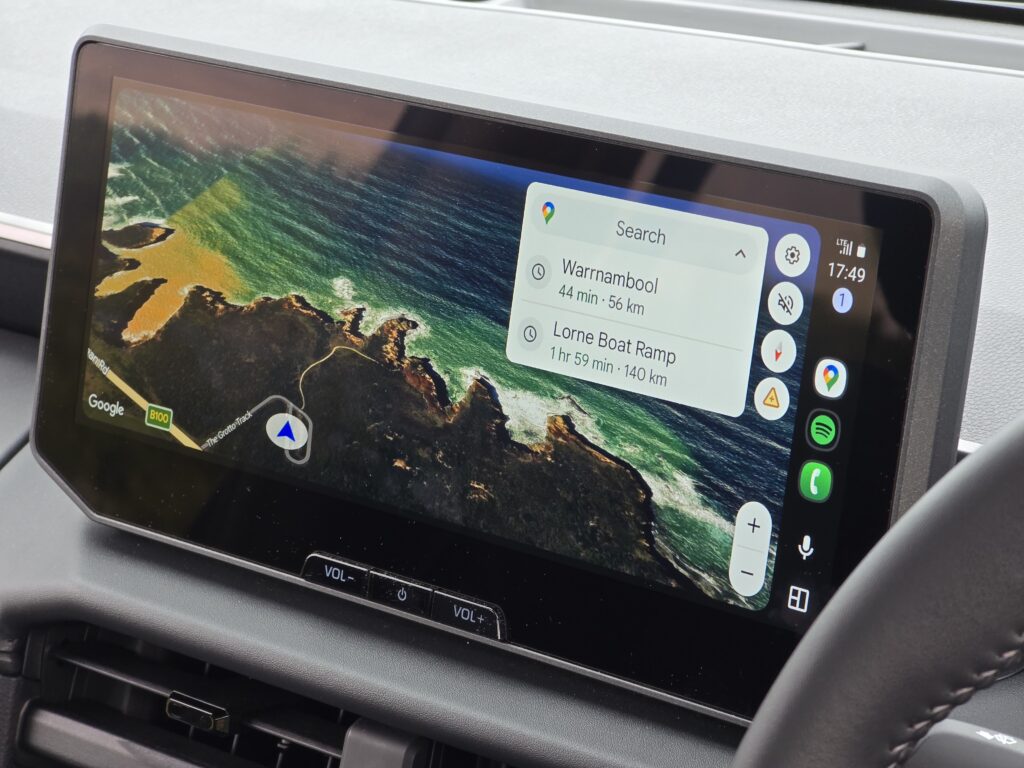
To see if these evolutionary upgrades translate to a genuinely better daily drive, we grabbed the keys to the volume-selling 2026 Toyota HiLux SR Double-Cab 4×4 Automatic and pointed its new nose down Victoria’s iconic, and often demanding, Great Ocean Road. Putting it through its paces across a mix of tight, sweeping tarmac and patchier country lanes, we set out to find if Australia’s default dual-cab still delivers the goods.
2026 Toyota HiLux SR 4×4 Double Cab – At A Glance
| Specification | Detail |
| Price (MSRP) | $59,490 (around $64,000 drive-away in Vic) |
| Engine | 2.8-litre four-cylinder turbo-diesel (with 48V V-Active technology) |
| Power | 150kW @ 3400rpm |
| Torque | 500Nm @ 1600–2800rpm |
| Transmission | 6-speed automatic |
| Drivetrain | Part-time 4×4 with dual-range & rear differential lock |
| Fuel Economy (Claimed) | 7.4L/100km (combined) |
| Fuel Tank Capacity | 80L |
| Dimensions (L x W x H) | 5320mm × 1855mm × 1865mm |
| Wheelbase | 3085mm |
| Kerb Weight | 2124kg |
| Braked Towing Capacity | 3500kg |
| Safety Rating | 5-star ANCAP |
| Warranty | 5 years / unlimited km |
| Servicing | Once every six months at $395 per service for the first five years ($3950 in total) |
2026 Toyota HiLux Pricing and Standard Equipment
Getting into a HiLux is going to cost you a bit more coin this time around. The entry-point Workmate is now a hefty $6,260 dearer than before, while the popular mid-spec SR5 grades have jumped by between $2,730 and $3,320 compared to the outgoing lineup.
There’s also been a bit of a structural shuffle, with the aggressive GR Sport dropped from the range alongside the wide-track footprint of the old flagship. Instead, we’re back to a familiar and proven hierarchy spanning Workmate, SR, SR5, Rogue, and Rugged-X. As always, Toyota offers a dizzying array of pick-up or cab-chassis options, alongside single, Extra, and double-cab body styles depending on the grade you land on.

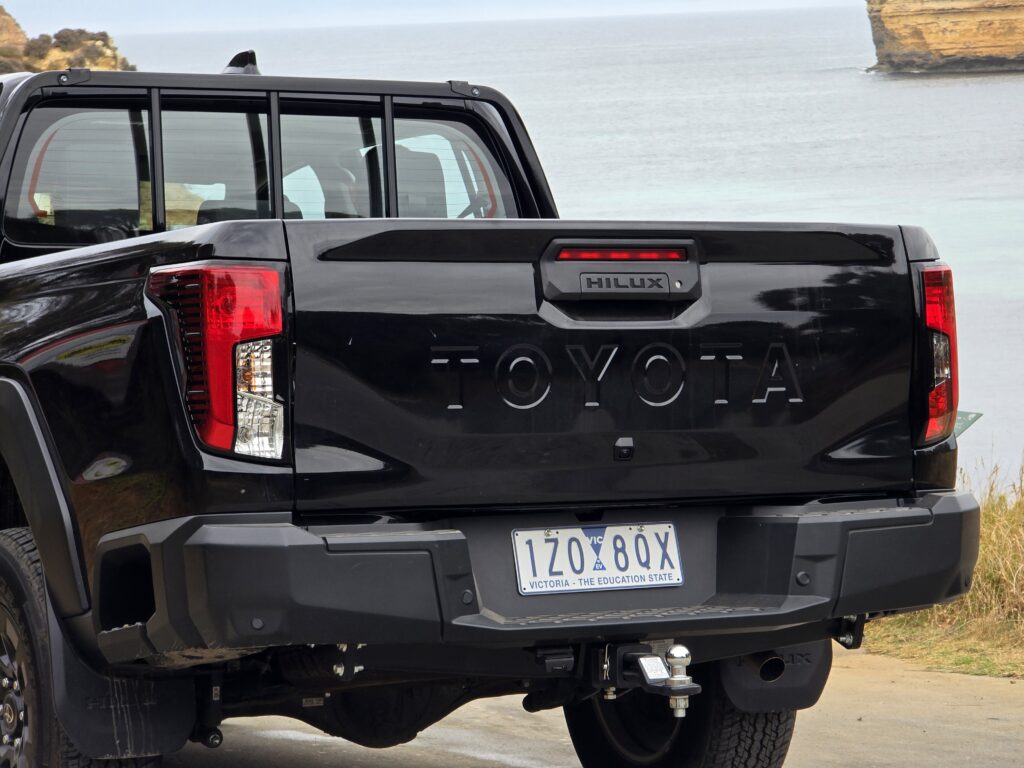
To help buyers swallow those price hikes, Toyota has thrown a serious swag of new equipment at the 2026 HiLux as standard. Every model now benefits from LED headlights, a much-needed 12.3-inch infotainment screen complete with wireless Apple CarPlay and Android Auto, built-in satellite navigation, DAB+ digital radio, and a digitised instrument cluster.
The safety kit has also been given a welcome boost across the board, adding crucial driver aids like lane-centring assist and blind-spot monitoring to the mix. While that big 12.3-inch central touchscreen is uniform across the range, the driver’s digital display varies from 7.0 inches to a full 12.3 inches depending on how much you spend. Toyota has also rolled out an updated version of its connected services smartphone app.
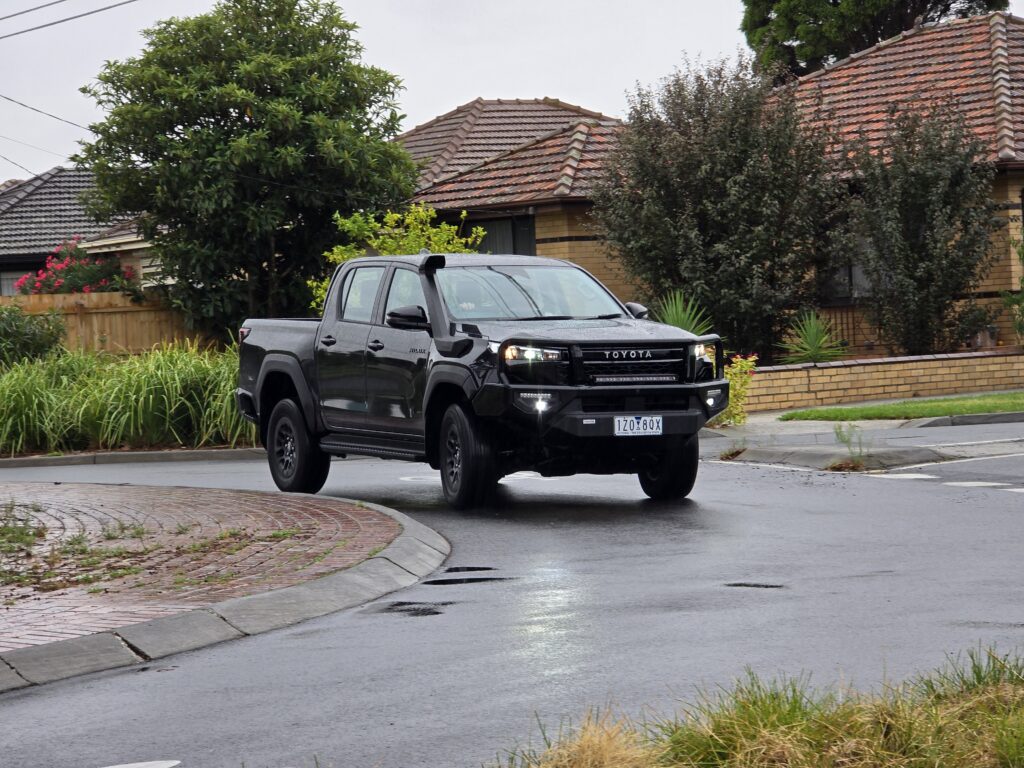
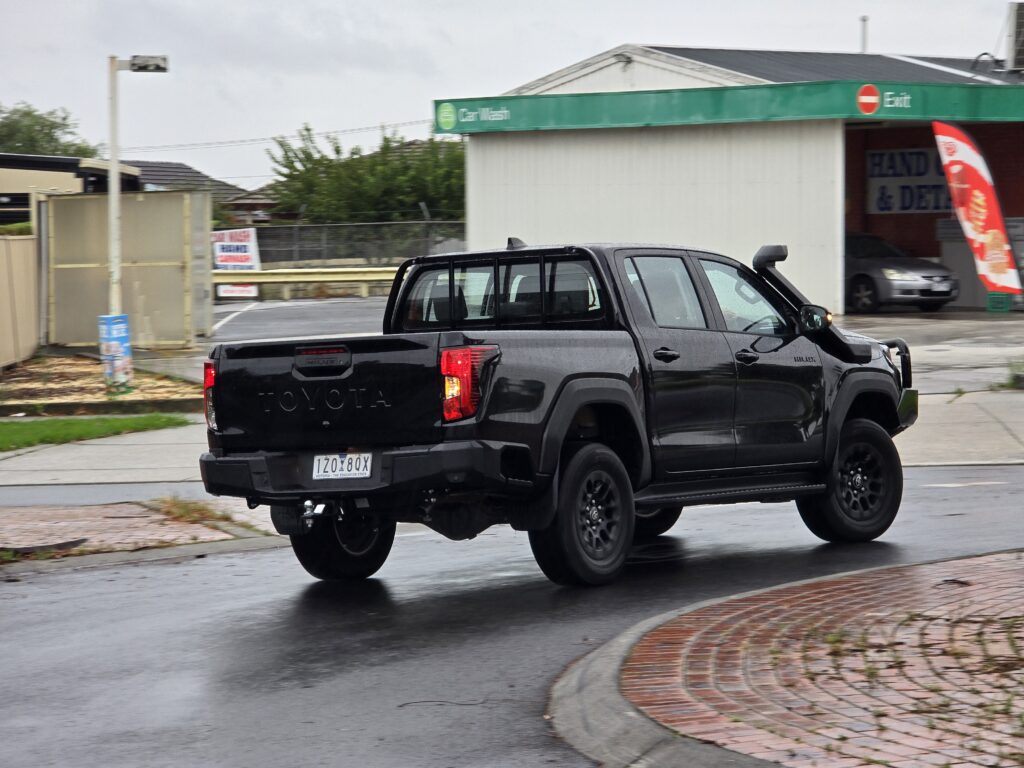
Looking at our SR test vehicle, it gains a solid list of upgrades that make it feel far less agricultural, including a leather-trimmed steering wheel, keyless entry and start, a wireless phone charger, and a very handy 360-degree camera. Stepping up to the SR5 nets you luxuries like heated front pews, a heated steering wheel, dedicated off-road cameras, and proper rear disc brakes. Mind you, if you tick the box for the optional Premium Interior Package on the SR5, it pushes the price tag right into the firing line of heavy-hitting rivals like the Ford Ranger Wildtrak and Isuzu D-Max LS-U.
Further up the ladder, the Rogue and Rugged-X now share the exact same footprint and retain those rear disc brakes, but they target very different buyers. The Rogue takes a distinctly more road-friendly, lifestyle approach with its sleek sailplane and a marine-carpeted tub, while the Rugged-X is unashamedly focused on heavy off-road use, sporting a rugged front bull bar straight from the factory.


Looking a little further down the road, an all-electric HiLux is locked in for a first-half 2026 arrival. Developed in close conjunction with and brutally trialled by mining giant BHP, the EV ute offers a driving range hovering around the mid-300-kilometre mark. While it will officially become part of the local HiLux mix, Toyota is realistic about its immediate future, expecting take-up to be heavily driven by commercial fleet partners rather than the general public.
| 2026 Toyota HiLux 4×2 | Price before on-road costs |
|---|---|
| WorkMate 2.8 manual single-cab/chassis | $33,990 |
| WorkMate 2.8 auto single-cab/chassis | $35,990 |
| WorkMate 2.8 auto double-cab pickup | $47,990 |
| SR 2.8 auto dual-cab pickup | $52,990 |
| 2026 Toyota HiLux 4×4 | Price before on-road costs |
|---|---|
| WorkMate 2.8 auto single-cab/chassis | $45,990 |
| WorkMate 2.8 auto double-cab/chassis | $52,490 |
| WorkMate 2.8 auto double-cab pickup | $53,990 |
| SR 2.8 auto extra cab-chassis | $54,990 |
| SR 2.8 manual double-cab/chassis | $54,990 |
| SR 2.8 48V auto double-cab/chassis | $57,990 |
| SR 2.8 48V auto double-cab pickup | $59,490 |
| SR5 2.8 manual double-cab pickup | $63,990 |
| SR5 2.8 48V auto double-cab/chassis | $64,490 |
| SR5 2.8 48V auto double-cab pickup | $65,990 |
| Rogue 2.8 48V auto double-cab pickup | $71,990 |
| Rugged X 2.8 48V auto double-cab pickup | $71,990 |
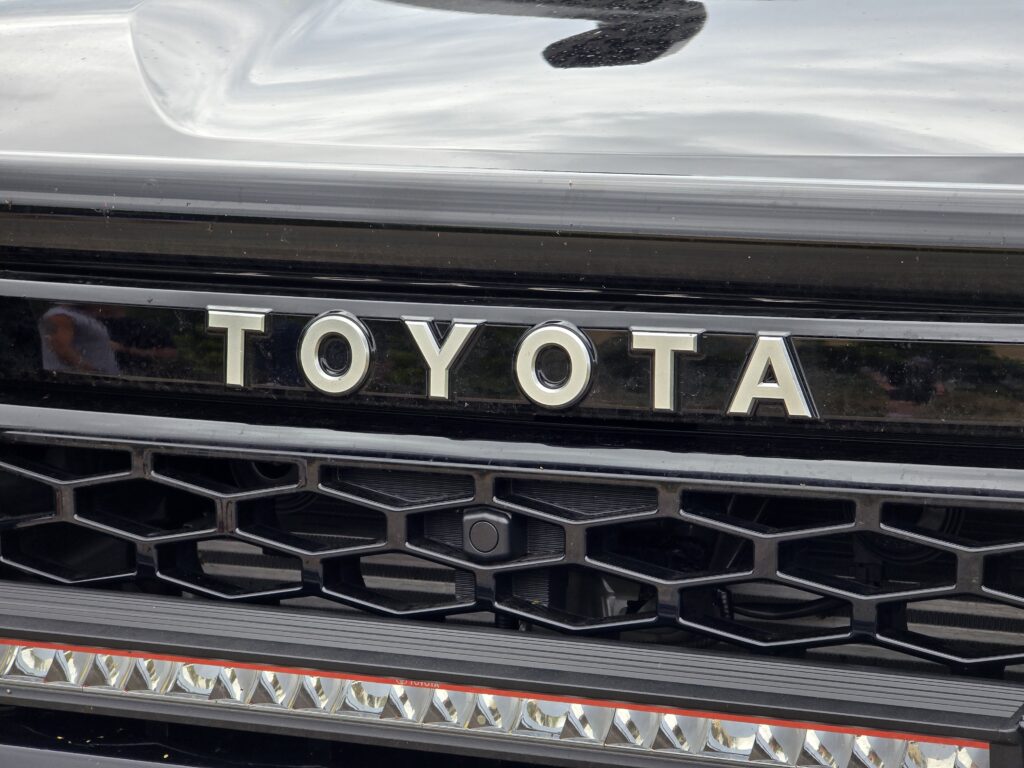

The HiLux comes standard in Glacier White, with Stunning Silver, Eclipse Black (seen here), and (new) Ash Slate available for an additional $675, while the SR5 and above can be painted in Frosted White, Feverish Red, and (new) Sunglow.

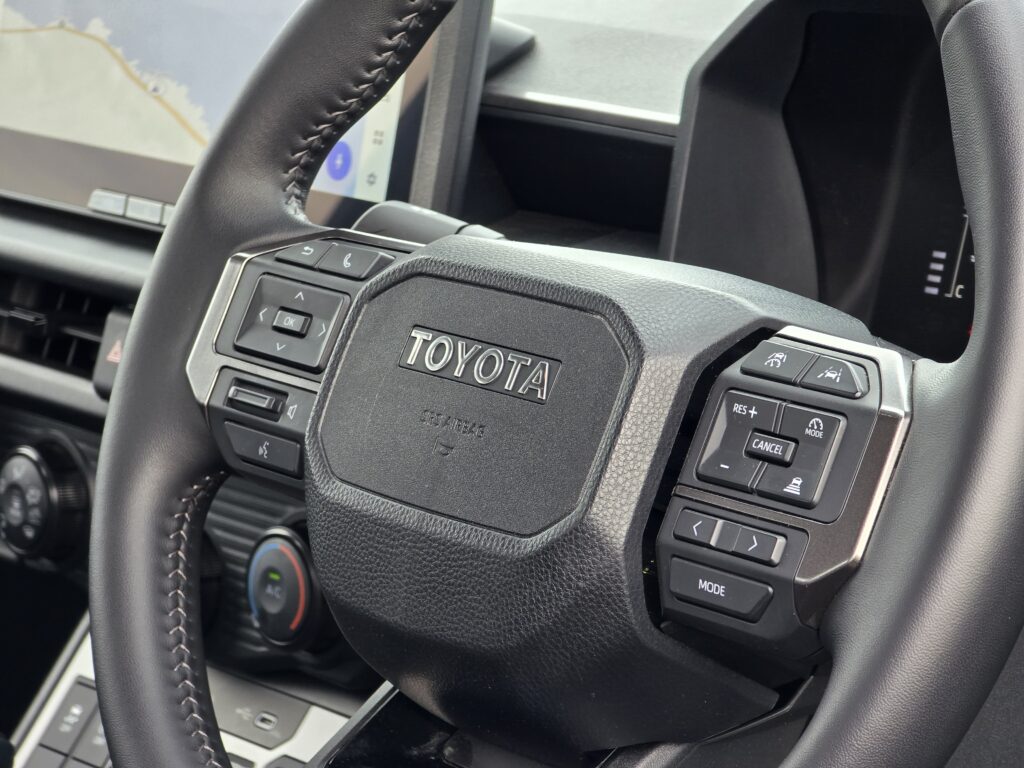
Inside, black upholstery is standard, with ‘Mineral’ upholstery standard on Rogue and Rugged X – though a premium interior pack is available for SR5 grade and above, which includes black leather, a power-adjustable seat for the driver with lumbar support, and a nine-speaker JBL sound system, costing $2500.
What’s good about the 2026 Toyota Hilux?
If, like a massive chunk of Aussie buyers, you currently have a HiLux sitting in your driveway, the interior is where you’re going to notice the single biggest leap forward with this new model.
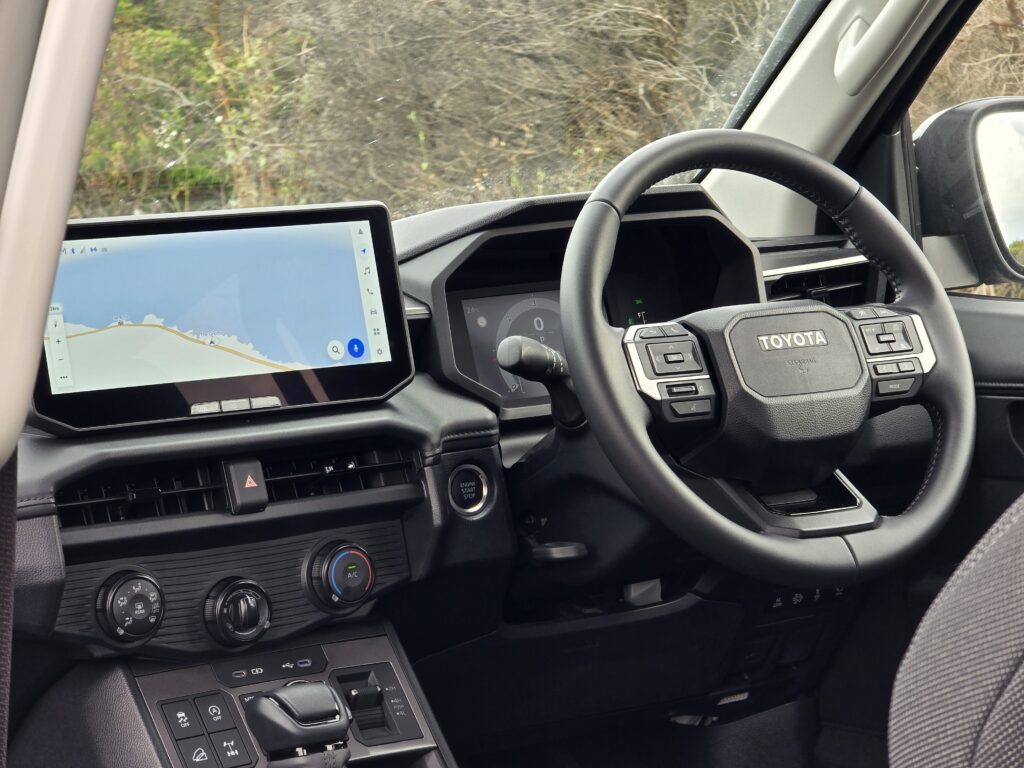
Borrowing heavy design inspiration from the new Prado and other fresh commercial metal in the Toyota stable, the HiLux gets a far more modern, three-tiered dashboard architecture—completely dominated by a new 12.3-inch landscape touchscreen that is now standard right across the range.
Wireless Apple CarPlay and Android Auto are thankfully standard, as is a digital instrument cluster measuring 7.0 inches in the WorkMate and our SR test car, before expanding to a full 12.3 inches for the SR5 and above. That massive new 12.3-inch central screen sits proudly (perhaps a touch too proudly for some tastes) atop the dash. The lack of traditional hard shortcut buttons means there is a bit of a learning curve here, but you do get a pair of physical volume buttons at the base of the bezel alongside a power/mute button. Nice.
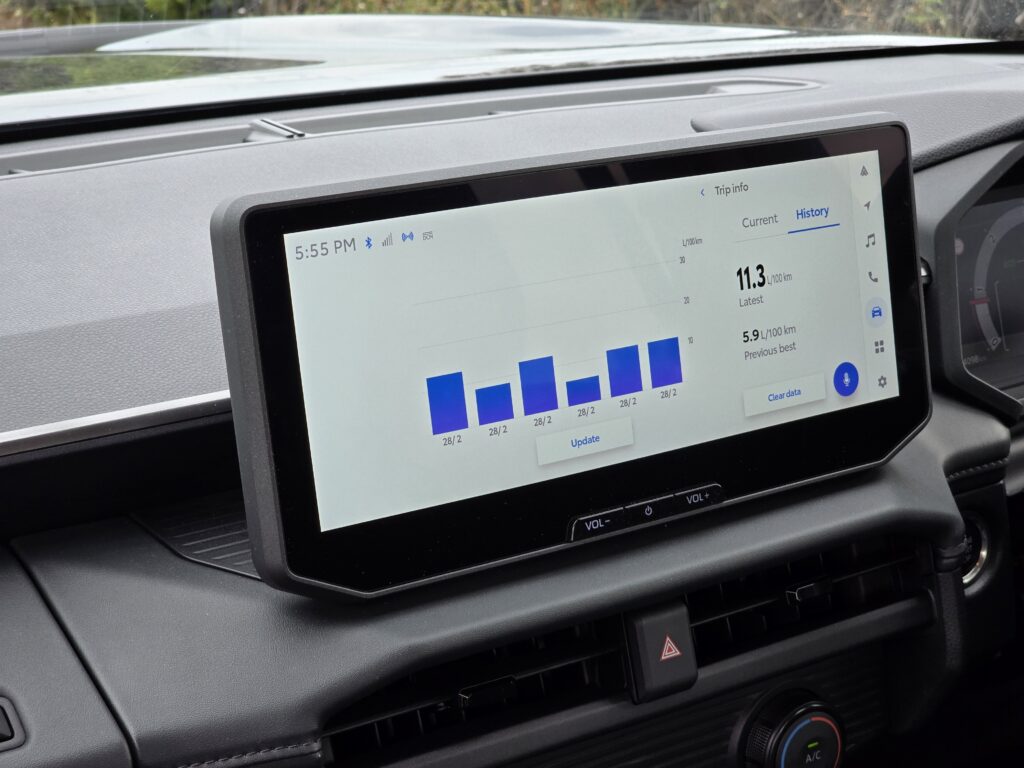

As for the screen’s usability? Well, it’s typical modern Toyota. It shares the same core operating software as the rest of the fleet, which can feel a little frustrating and clunky at times.
Some of the sub-menus feel needlessly buried, meaning you’ll definitely need to spend some quality time getting acquainted with the interface if you’re upgrading from an older rig.
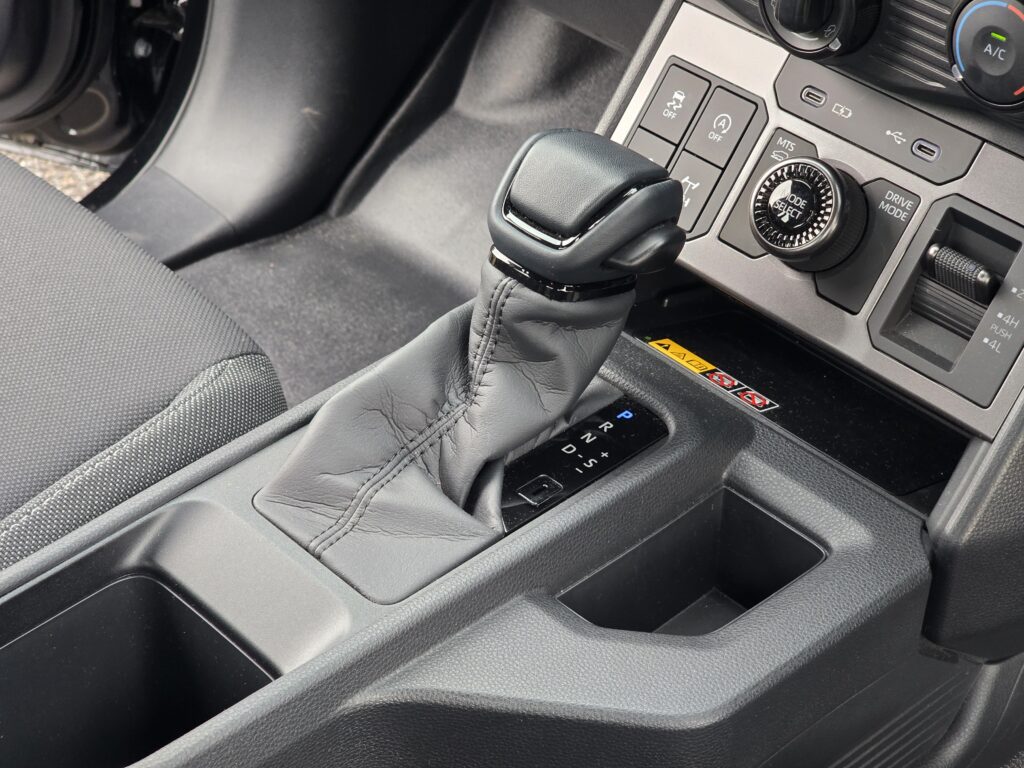
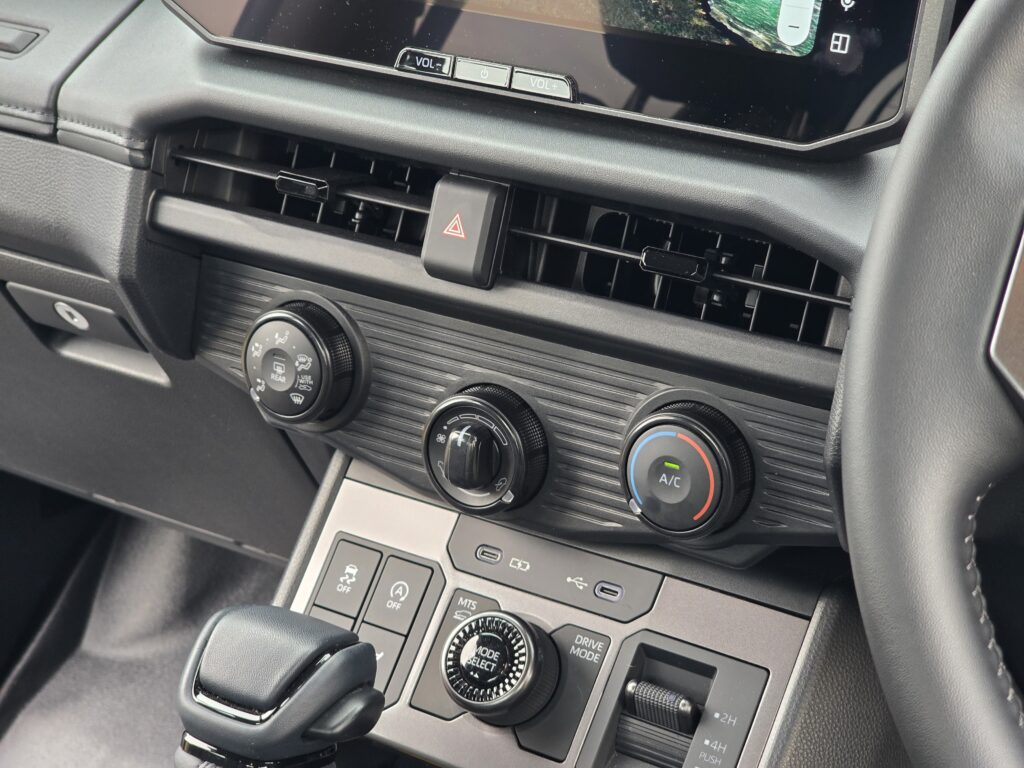
On the plus side, Toyota hasn’t completely abandoned physical switchgear. You still get a proper, tactile control panel for the climate system featuring toggle switches for temperature, fan speed, and air direction, alongside physical demister and recirculation buttons. It’s a setup that’s becoming increasingly rare these days, and we love it.
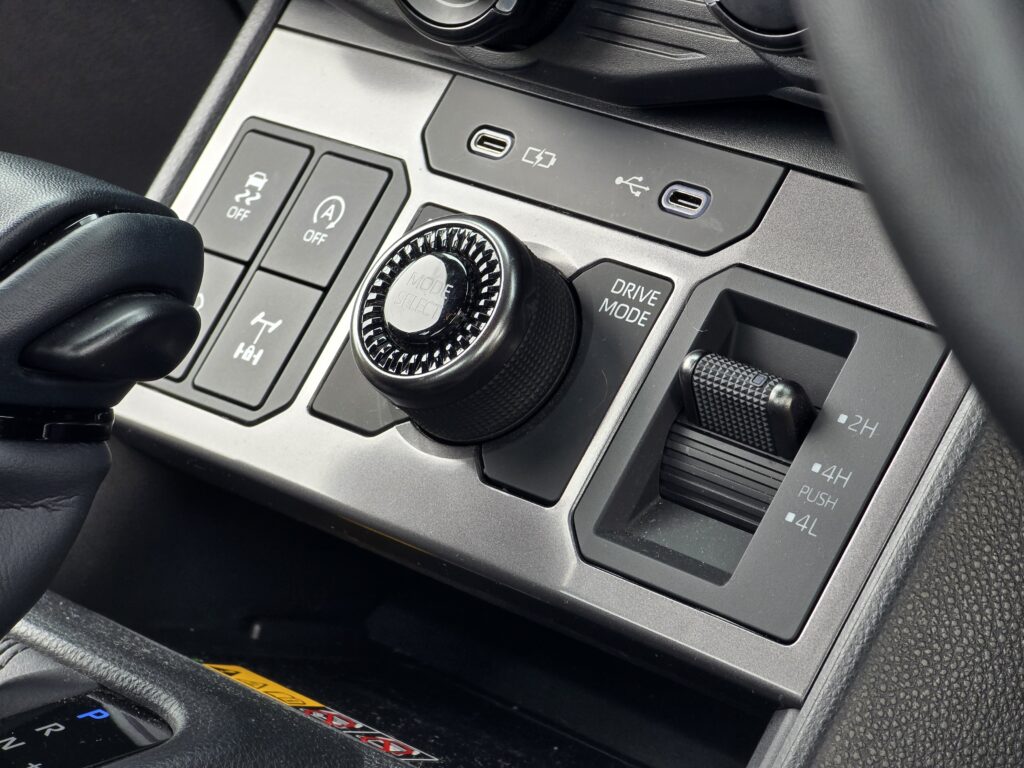
Positioned just below that climate panel is a dedicated bank of controls for the oily bits, including hill descent control, the rear differential lock, the drive mode selector dial, and your traditional part-time four-wheel drive switchgear.
You’ll also find the seat heating buttons here, though they remain basic single-stage switches, whereas plenty of rivals now give you three stages of adjustment. Oh, and there are still no ventilated pews to be found, either.
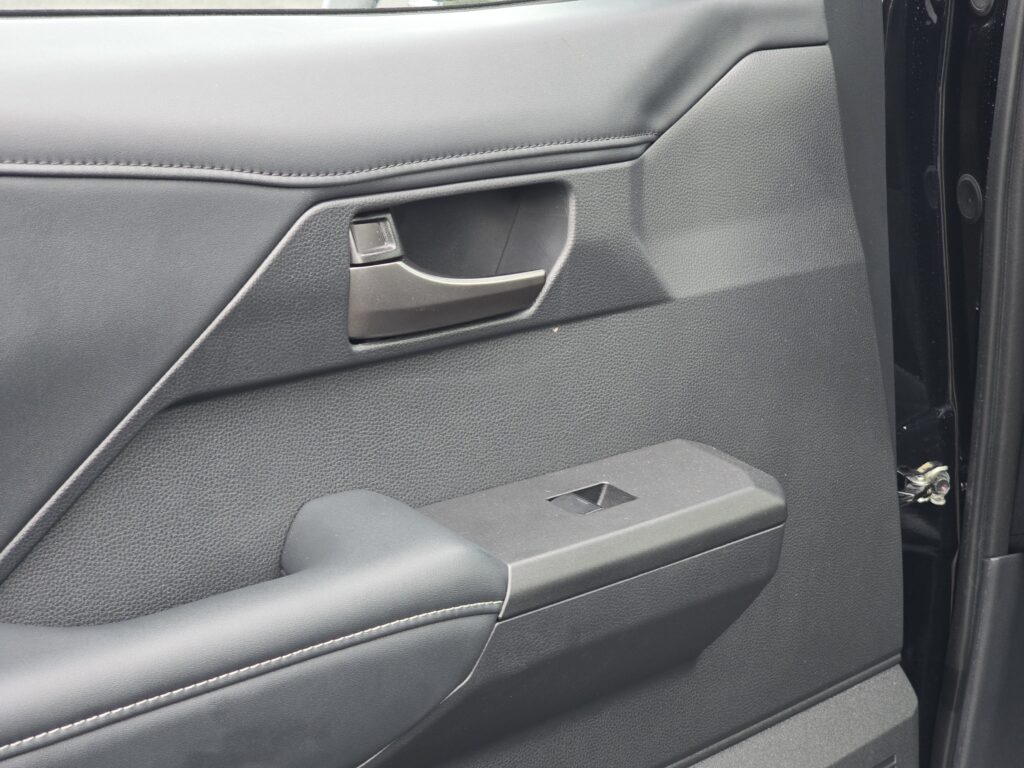
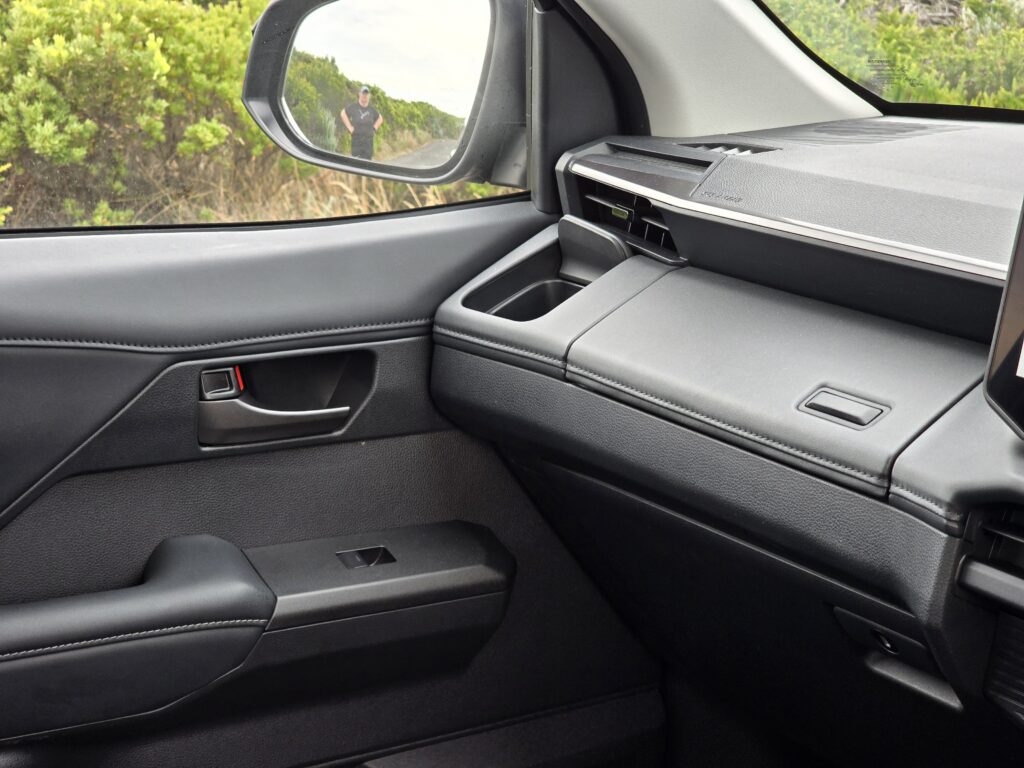
Moving down to the centre console, you get a pair of removable cupholders and a covered console bin with a soft-touch lid. Pop that lid open, and you’ll find a handy 230V three-pin power outlet alongside a standard 12V port.
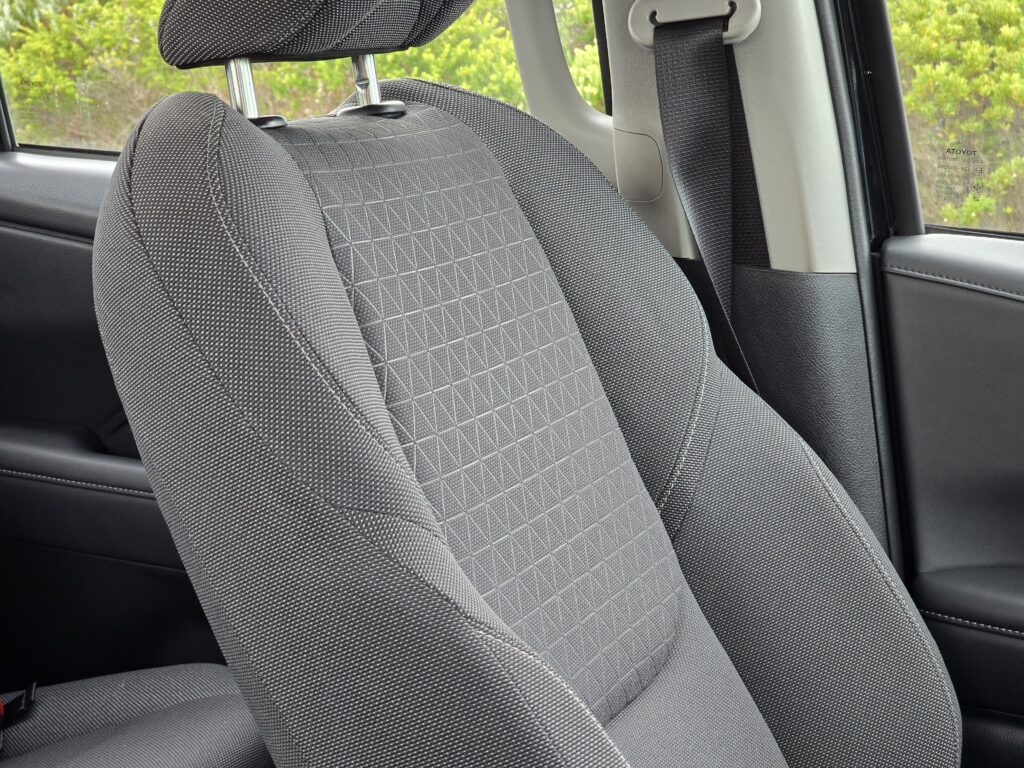
Toyota claims the front seats are entirely all-new, engineered to offer much better long-distance comfort than before. The ergonomics are spot on, and it takes no time at all to fiddle with the manual adjustments and the steering wheel to find a comfortable driving position.

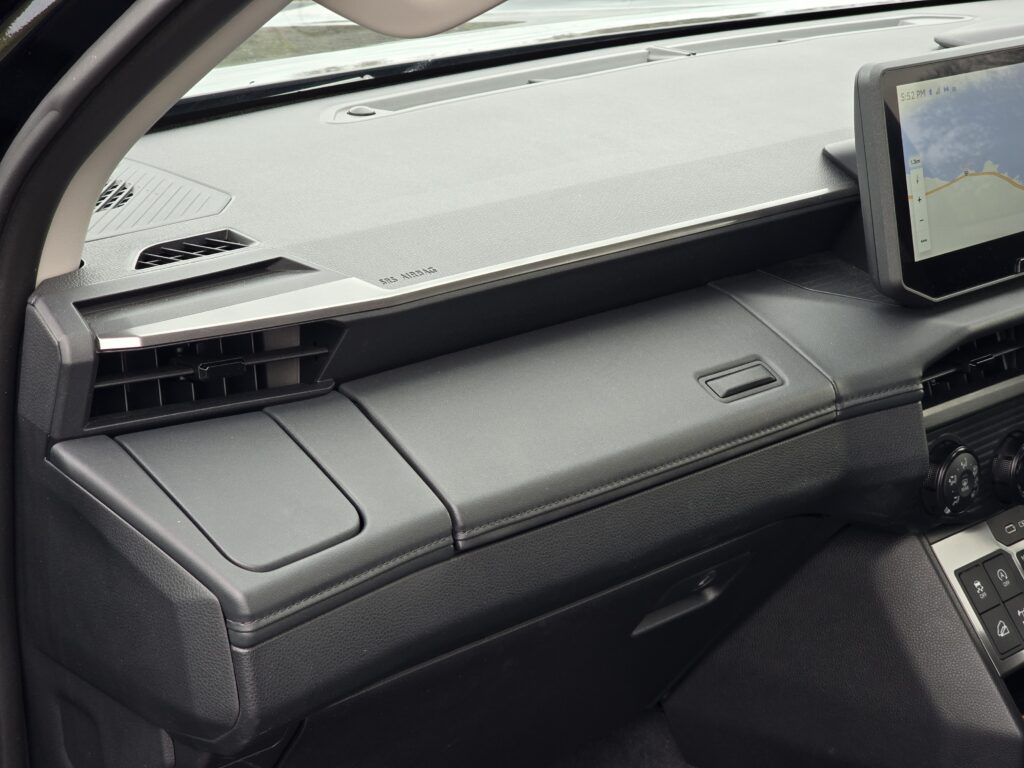
That said, the cabin still feels relatively cosy. Because the core body shell is identical to the old HiLux from the A-pillar right through to the C-pillar, there isn’t a single extra millimetre of cabin space to play with. It’s perfectly liveable, but if swinging cats is your favourite pastime, you’ll probably want to look at a wider rival.
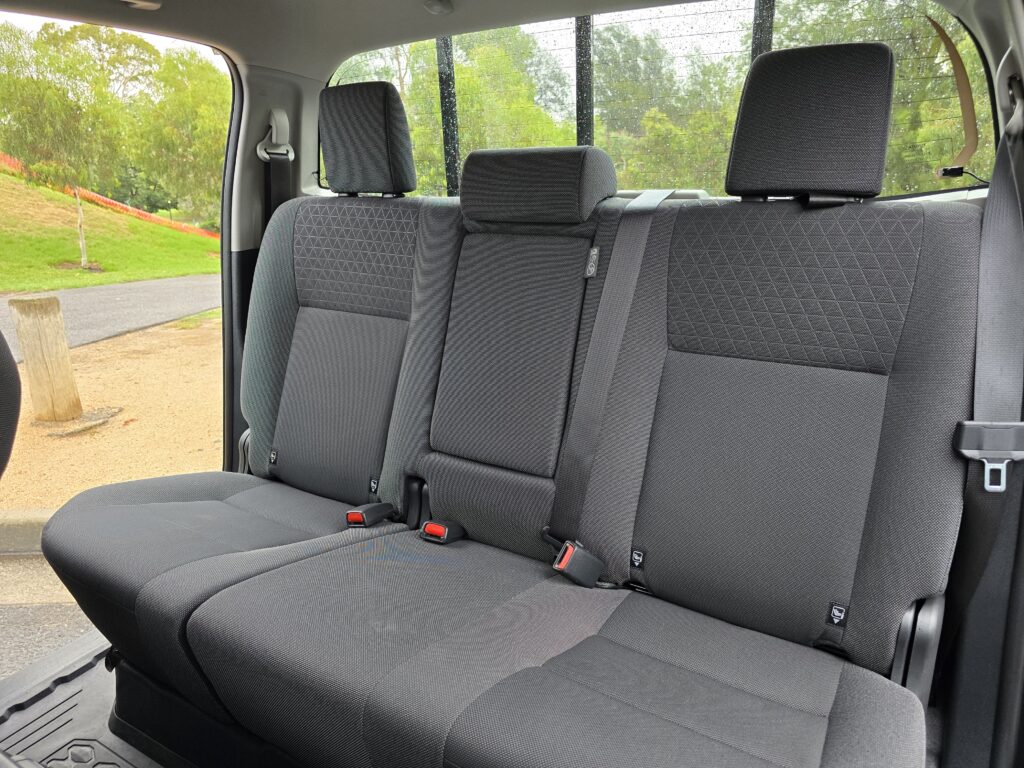
The back seat remains a bit on the tight side, though it’s still perfectly capable of housing two average-sized adults without too much fuss. I spent about 40 minutes riding in the second row, and truth be told, I wouldn’t have wanted to spend much longer back there.


Switch focus to the tarmac, and the most interesting, yet least surprising element of this heavily updated HiLux is the way it actually drives. It has been visibly enhanced across every major dynamic metric, but the headline act is processes-driven: the steering feel.


The introduction of a new electronic power-assisted steering (EPAS) rack has allowed Toyota to make the wheel beautifully light and effortless around town, while dialing in a much weightier, more direct feel on country roads without ever feeling nervous. It is an absolute game-changer for a ute that historically suffered from a cumbersome, gluggy steering rack.
As for real-world fuel economy? The official ADR claim is low for this mild-hybrid version of the ‘Lux, sitting at just 7.6L/100km. Out on our test loop, which threw a mix of open highway, freeway cruising, twisty country lanes, and urban stop-start traffic at it, we saw an average of 8.5L/100km. That’s a highly respectable, real-world result.

And while die-hard traditionalists will love that the HiLux’s 2.8-litre engine still doesn’t require AdBlue, others will point out that leaving it off keeps it a step behind more modern, emissions-compliant rivals.
What’s not so good about the 2026 Toyota HiLux?
While the new steering system and reworked sound deadening go a long way to make the HiLux more a creature of comfort, it’s clear that there is more work to be done by Toyota’s engineers in the driving department.
One of the big headlines for this update is that Toyota has split the HiLux range into two distinct suspension camps, with a heavy-duty tune aimed squarely at load lugging and towing, and a new ‘multipurpose’ setup designed to be more comfort-oriented. Our SR has, you guessed it, the heavy-duty tune, and boy were we in for a shock. In fairness, it would almost certainly settle down with half a tonne of ballast in the tub, but driven unladen as tested, the 2026 Toyota HiLux SR was rough as guts over patchier country roads.


To be fair, hit a stretch of corrugated gravel and the rear end seems to relax into a predictable frequency, floating the ute over the chatter without too much fuss. Introduce random, sporadic potholes into the equation, though, especially when you’re loaded up mid-corner at speed, and any sign of chassis sophistication or composure quickly flies out the window.
Look at the latest Mitsubishi Triton GLX+, for instance. It leaves a massive $6,000-plus change in your wallet compared to our equivalent dual-cab HiLux SR 4×4 auto and rides on heavy-duty springs, yet it simply doesn’t assault its occupants to anywhere near the same extent.
Out at freeway speeds, I found the aging six-speed automatic transmission could occasionally be caught napping when you stomp the right pedal for a sudden burst of overtaking acceleration.

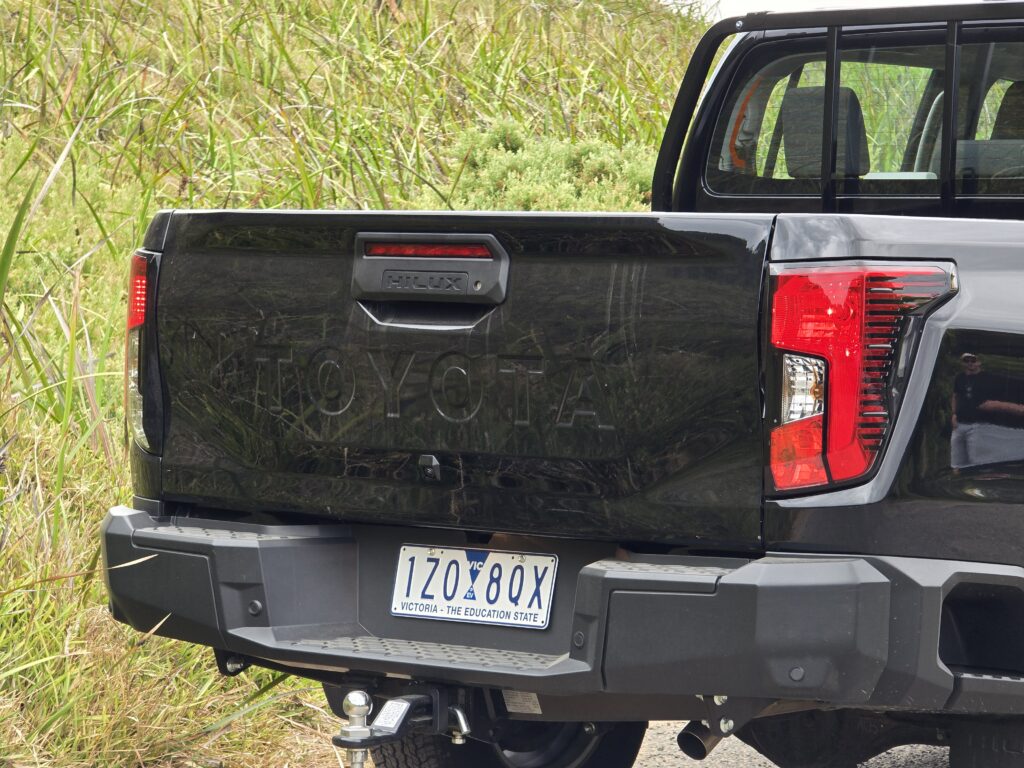
Around town and at lower speeds, however, the 2.8-litre engine is eager, and the self-shifter is genuinely clever. The new V-Active engine idle stop/start system, assuming you leave it turned on, is also surprisingly well-mannered. It drastically smooths out the way the powertrain fires back to life, and while this 48V setup is hardly hardcore hybrid tech, there’s clearly enough real-world evidence to show it actually helps move the needle on fuel economy.
On the upside, the new HiLux hasn’t been fouled by the sort of incessant, over-sensitive active safety tech that ruins so many modern cars. There’s no nanny driver-monitoring camera staring at your face, which means zero ‘bing-bong’ annoyance. You still get traffic sign recognition, but thankfully, it quietly displays the limit without constantly beeping at you for creeping a single click over. Nice.


Beyond that, the lane-keep assist feature is mercifully straightforward to turn off, and the adaptive cruise control works smoothly. Then there’s the 360-degree parking camera system, which is miles ahead of the grainy, low-res units found in older HiLux iterations.
It also feels like a massive missed opportunity that Toyota didn’t use this generational overhaul to gift the HiLux a full-time four-wheel-drive system, especially when it’s readily available on the Ford Ranger and other modern competitors. Having the ability to just twist a dial into a ‘4A’ (4×4 Auto) mode provides a massive confidence boost when navigating a heavy, unladen dual-cab on all-terrain tyres through the pouring rain.
Should I buy a 2026 Toyota HiLux?
If you place a high premium on proven mechanical performance and bulletproof reliability, it’s genuinely hard to look past the new 2026 Toyota HiLux. The HiLux just feels built to last a war, or two.
The 2.8-litre turbo-diesel engine is an absolute known quantity, the overall ride is a bit better than before, and the latest round of updates give the ‘Lux a much more polished feel without drifting into anything untested.
There’s a bloody good reason why 51 per cent of HiLux buyers are return customers. They step into the showroom knowing exactly what they’re getting for their hard-earned coin, and Toyota has been smart enough not to spoil that recipe.
The vast Toyota dealer network is another massive selling point. If you’re touring the outback, working remote, or simply chasing total peace of mind, no other dual-cab on the market has the same blanket level of support across the country. Parts, servicing, and mechanical help are rarely far away, and that matters big time when you rely on your vehicle to earn a living.
For now, the HiLux remains exactly what the heart of the Aussie market wants: tough, predictable, fit-for-purpose, and backed by a brand that rarely gets it wrong. For that reason alone, expect it to remain parked firmly at the top of the sales charts. Just be warned about the rough ride though in the heavy-duty suspended variants,
Leave a Reply