
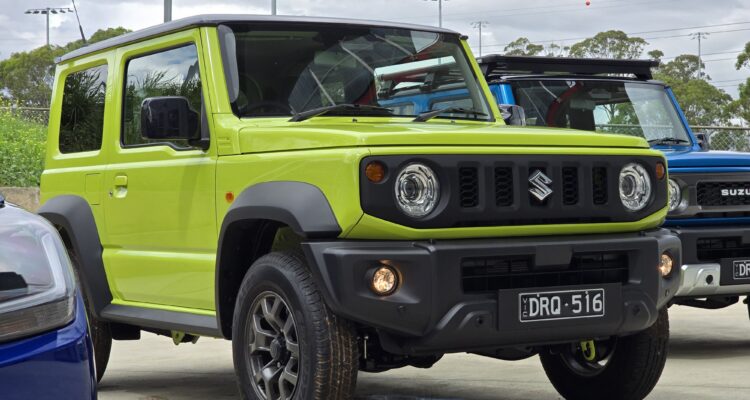
- Insanely capable off-roader
- Simple, utilitarian
- Comes in a manual!
- A 4-speed auto in 2026?
- Not that good to drive on-road
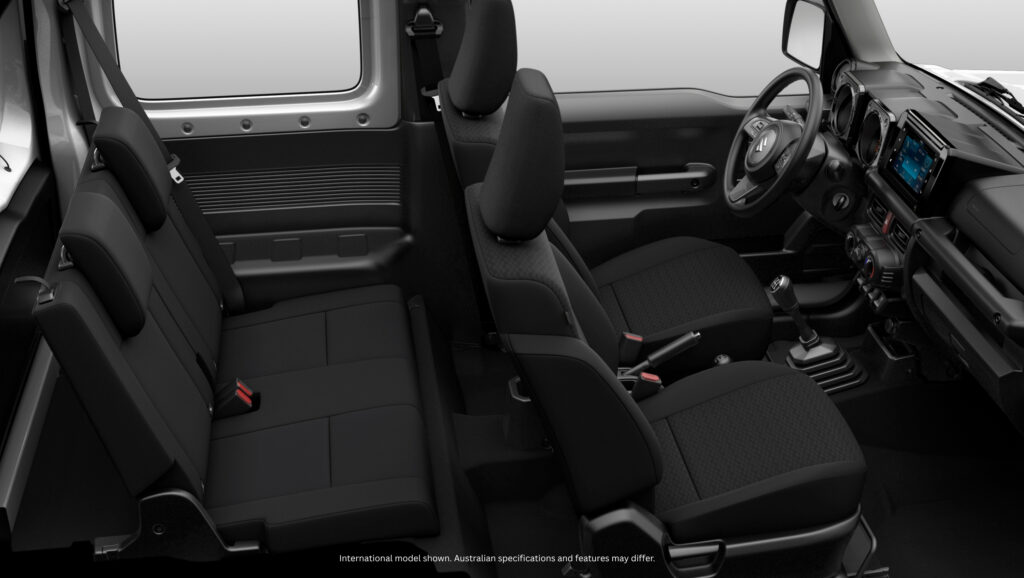
- Cabin will feel basic day to day
The return of the three-door Suzuki Jimny is big news for enthusiasts of the baby off-roader. Few cars have maintained the cult following of Suzuki’s pint-sized off-roader, especially after years of supply shortages following the COVID-19 pandemic.
Just as availability began to stabilise, new Australian Design Rules mandating autonomous emergency braking (AEB) forced the three-door Jimny off the market, leaving just the Indian-built five door. Now, it’s back.
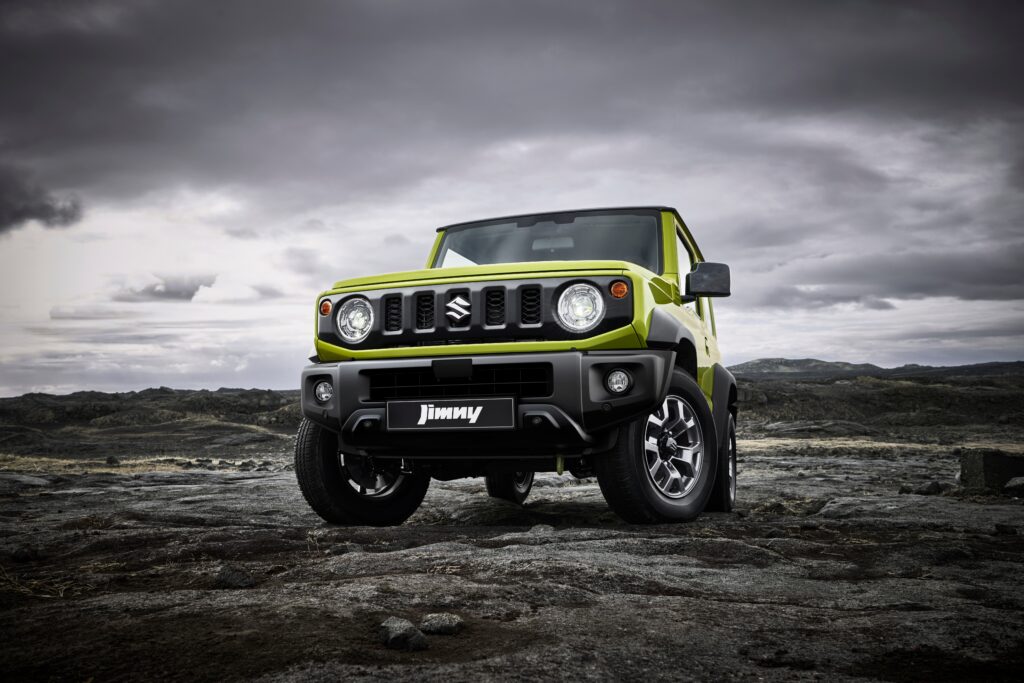
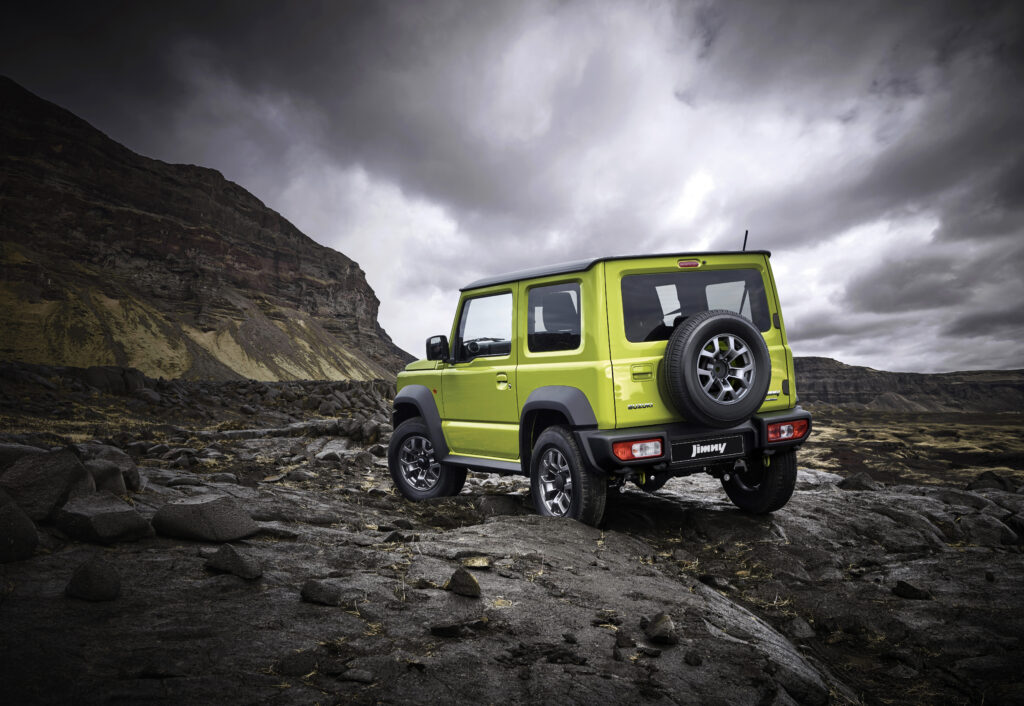
Suzuki has brought the Suzuki Jimny into line with local regulations, though not without compromise. On the surface, nothing has changed since its 2018 debut. It remains as boxy and characterful as ever. Underneath, however, are a handful of subtle revisions aimed at boosting safety and improving everyday usability. Whether that is enough is the real question.
Alongside the debut of the Suzuki Vitara Hybrid and Suzuki eVitara, Suzuki gave us at DiscoverAuto a brief stint behind the wheel on an off-road course. It does not take long to understand the appeal. Even over a short loop, the Jimny demonstrates why it commands such a loyal following. It is capable, full of character, and unlike anything else on the market. Sure, it isn’t the most refined thing in the world, but what other small car can climb up hills like a mountain goat?
2026 Suzuki Jimny Key Specs:
Price: From $31,990 drive-away
Available: Now
Powertrain: 1.5-litre four-cylinder
Output: 75kW/130Nm
Transmission: 5-speed manual or 4-speed automatic
Fuel: 6.4L/100km ADR Combined
CO2: 146g/km ADR Combined
Safety rating: Unrated
2026 Suzuki Jimny Pricing and Standard Equipment
Pricing for the three-door Suzuki Jimny now kicks off at $31,990 before on-road costs for the Lite. From there, the regular manual lands at $33,990, while the automatic tops the range at $36,490.
Under the bonnet, nothing has changed. Every variant continues with Suzuki’s 1.5-litre naturally aspirated four-cylinder, producing 75kW and 130Nm. It is paired with the brand’s ‘ALLGRIP Pro’ part-time four-wheel-drive system, with a choice of a five-speed manual or a four-speed automatic. We only managed to sample the automatic during our brief off-road stint.
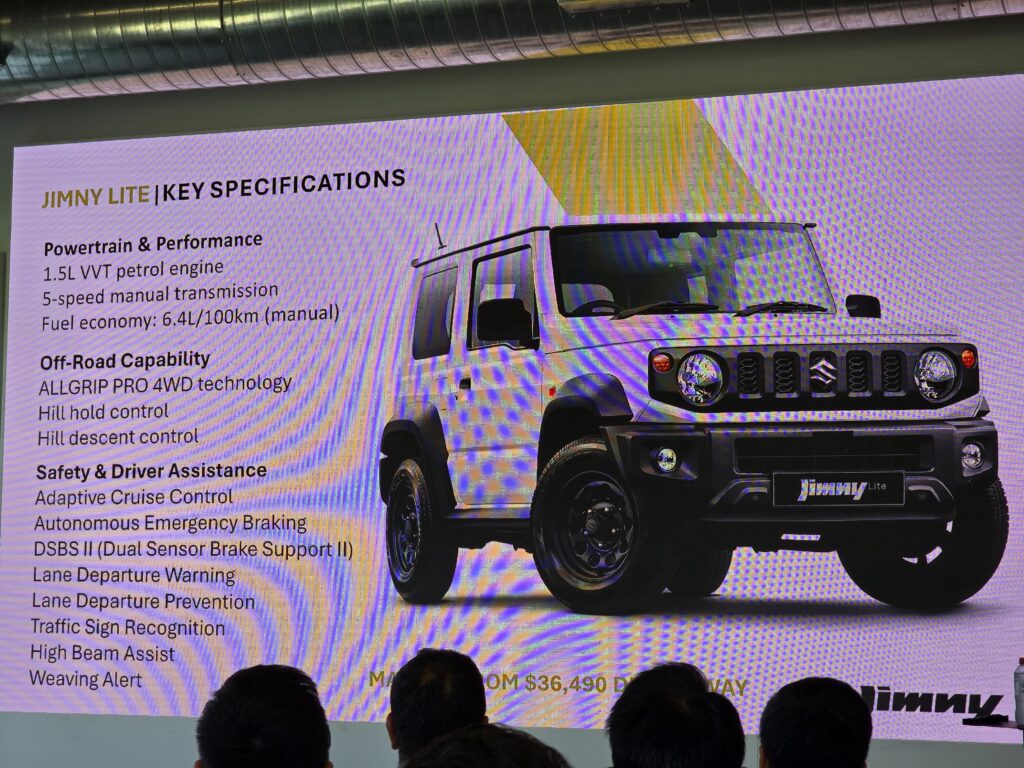
Official fuel consumption is quoted at 6.4L/100km for the manual and 6.9L/100km for the automatic on the combined cycle.
The Jimny Lite remains true to its name. It is basic, with 15-inch steel wheels, a two-speaker audio setup, halogen headlights and unpainted side mirrors, and it is only available as a manual. That said, it is not quite as sparse as it once was.

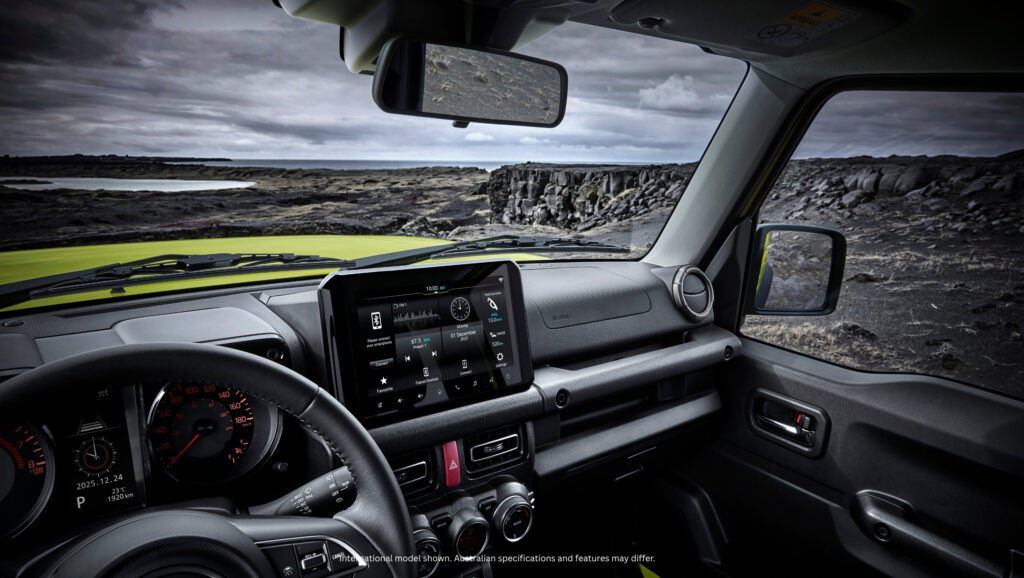
There is now a 7.0-inch infotainment screen with Apple CarPlay and Android Auto in the Lite, while stepping up brings a larger 9.0-inch display with the same smartphone integration. Across the range, buyers also pick up front and rear parking sensors, adaptive cruise control, lane departure prevention and an updated AEB system.
Move beyond the Lite and the standard Jimny adds features like alloy wheels, satellite navigation, privacy glass, heated/electric-folding mirrors, single-zone automatic climate control and a leather-wrapped steering wheel.

The Jimny previously held a three-star ANCAP safety rating, though that assessment has now lapsed under the organisation’s six-year expiry window.
Colour choices span familiar options like white, green, grey and yellow, with some variants offering metallic and two-tone finishes.
Ownership is covered by a five-year, unlimited-kilometre warranty, with servicing intervals set at 12 months or 10,000km.
If the three-door feels a little tight for your needs, there is also the larger Suzuki Jimny XL, which starts from $34,990 before on-road costs.
What’s good about the 2026 Suzuki Jimny?
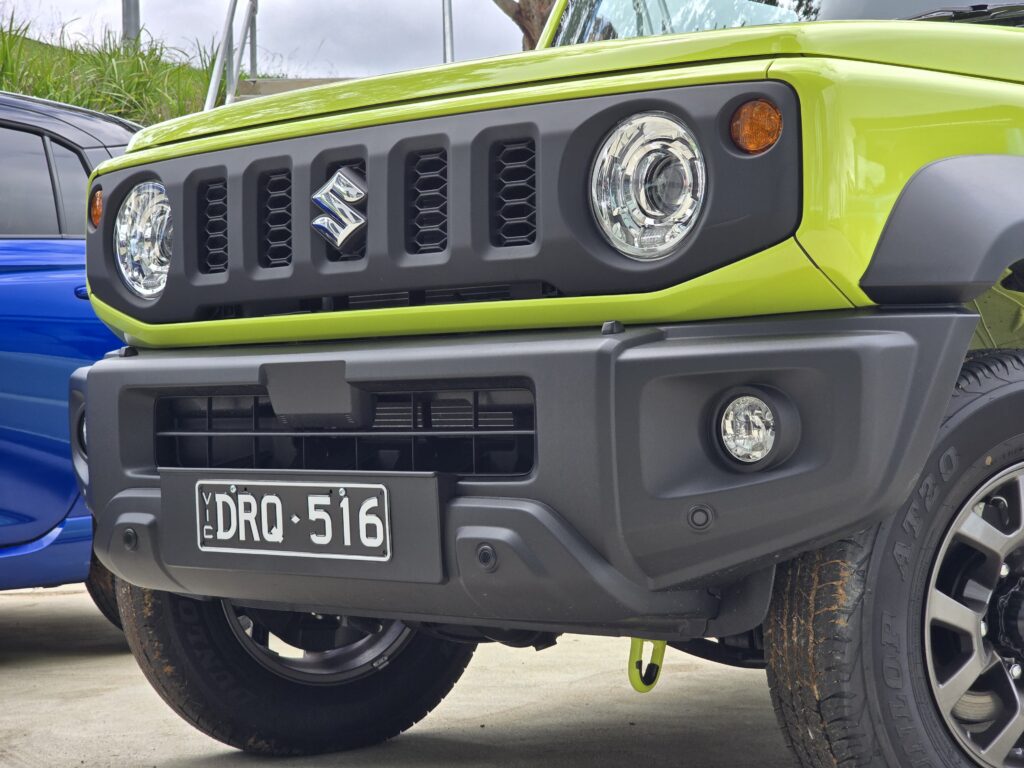
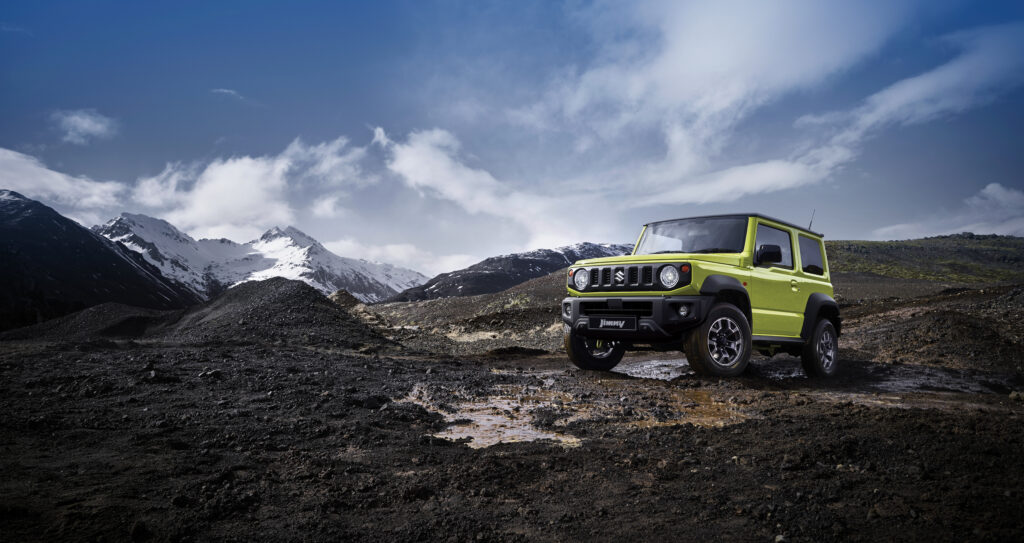
Let’s not overthink it. The 2026 Suzuki Jimny has one of the coolest-looking cars on sale right now. It looks both cute and butch at the same time, with a boxy silhouette, round headlights and upright stance give it a level of character most modern SUVs simply cannot replicate. It is a big part of why the Jimny has reached near-icon status, but it is far from the only reason.

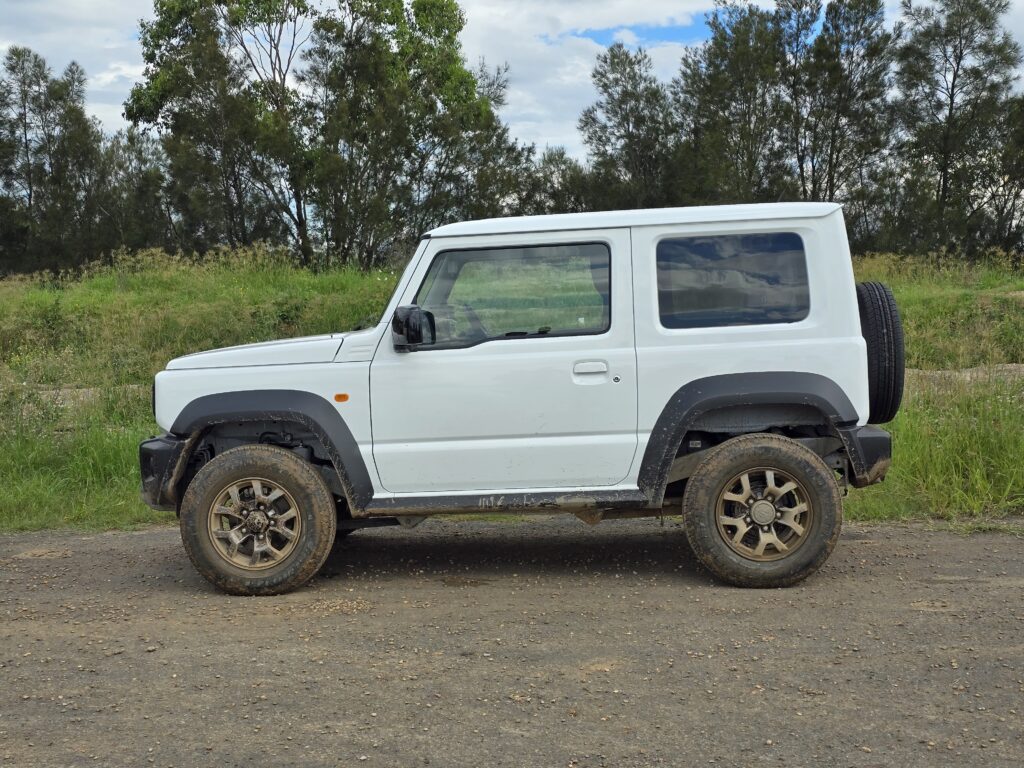
Get it off the road and the appeal becomes even clearer. Our test loop was super slippery, and even on regular road-going tyres, steep climbs and uneven terrain were no match for the Jimny, with no concerns around approach angles, and there is more usable ground clearance than you might expect from something this compact. While there is no locking differential to be found, the low-range transfer case setting, along with brake-based interventions to stop wheels from spinning allows for confident progress in most conditions. The Jimny feels perfectly at home squeezing through tighter tracks and obstacles that would trouble larger four-wheel drives, and the tight turning circle only adds to that sense of agility.
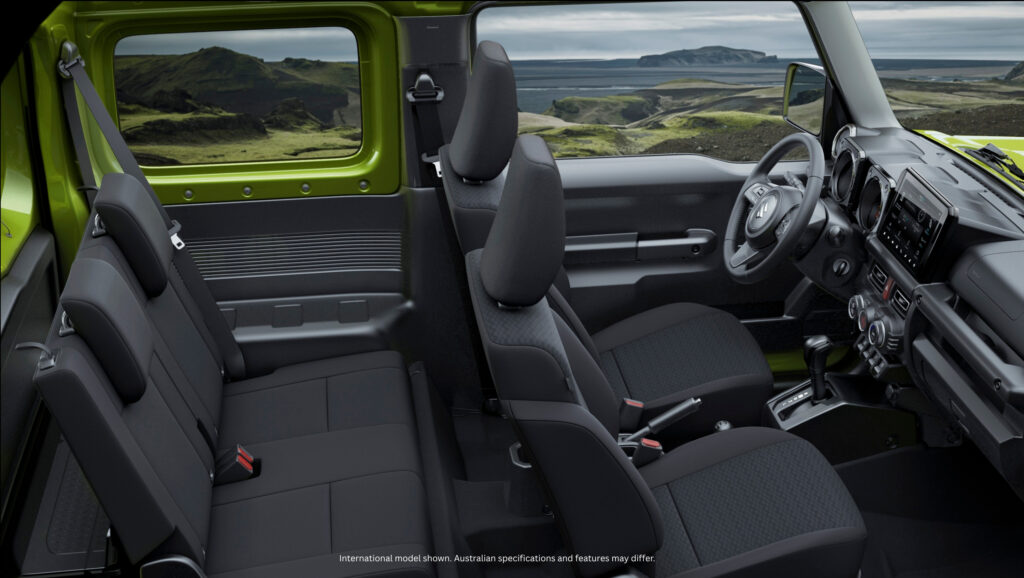
Inside, things are pretty spartan and basic, and Suzuki’s typically simple cabin design finally feels right at home. You can easily find a decent driving position, despite no reach adjustment in the steering wheel and the upright dash, chunky switchgear and no-fuss layout all feel purpose-built for a car that is meant to get muddy rather than show off. The colour centre screen in the instrument cluster, and a much easier to read fuel gauge are welcome additions.
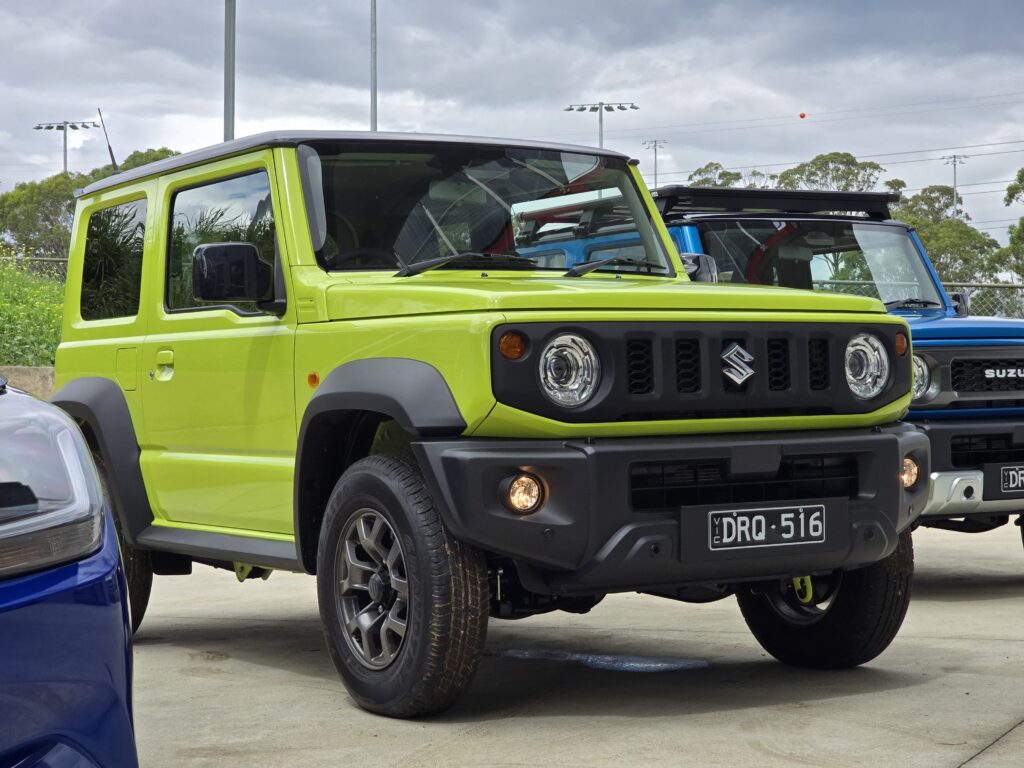

There is also a strong element of personalisation baked in. Buyers can choose from a range of colours that lean into the Jimny’s playful character. The Lite keeps things simple with white or green, and there’s a range of new accessories the brand has very kindly brought in from Japan.
In a move that’s very much in line with #savethemanuals, all Jimny models are still available with a 5-speed automatic gearbox. While we did not get the chance to sample it on this drive, with only the automatic available at low speeds, but the option alone is a win. For many buyers (such as myself), the ability to row your own gears is part of the Jimny’s appeal.
What’s not so good about the 2026 Suzuki Jimny?
For all its charm, the Suzuki Jimny does start to show its age when you line it up against similarly priced alternatives. There is no denying its off-road ability, but inside, it can feel a bit stark and almost cave-like by modern standards.
Use it as a daily and that simplicity becomes more noticeable. If you are not regularly heading off the beaten track, the cabin does feel sparse. At one point, I caught myself appreciating the presence of two centre cup holders more than expected, which says a lot about how minimal things are. The ride is not outright uncomfortable, but the short wheelbase makes itself known. There is a constant sense of movement over bumps, and the steering feels slow and a little vague.
Weighing just over a tonne, the Jimny’s tall and narrow proportions can also be felt on the road. There are moments where the body leans and sways enough to make you question how planted it really is. It never feels unsafe, but it does not offer the same confidence as larger, heavier off-roaders. Then again, those alternatives often cost significantly more.
Despite its small capacity, the 1.5-litre engine is better than expected. It is not quick, but it suits the Jimny’s lightweight nature and does a decent job of getting it moving without feeling overly strained. The four-speed automatic, however, feels dated. With so few ratios, there are noticeable gaps between gears, especially compared to the multi-speed transmissions now common elsewhere.
Should I buy a 2026 Suzuki Jimny?
Fundamentally, not much has changed with the 2026 Suzuki Jimny. If you already own one, there is little here that would justify upgrading to the latest version.
That is not a criticism, though. The Jimny sticks to the same formula it has always followed: compact, capable and genuinely fun, all wrapped up in a relatively affordable package. This update brings a handful of safety and tech additions, but the core experience remains untouched. It is still a lightweight, ladder-frame 4×4 designed for the rough stuff, not the daily grind.
Our time behind the wheel was limited to a low-speed off-road course, so we did not get the opportunity to properly assess its behaviour on open roads. That may not be entirely accidental. Previous reviews have consistently highlighted its shortcomings when it comes to on-road refinement, and nothing here suggests a dramatic shift in that regard.

Viewed through the right lens, the Jimny still makes a compelling case. If you want an affordable off-roader with real personality and genuine icon status, it stands almost alone. But if your plan is to use it primarily as a daily driver, it is worth approaching with caution and taking the time for a proper road test.
Because here is the reality. As an off-road toy, the Jimny is brilliant. It is simple, capable and hugely enjoyable in the right environment. As a one-size-fits-all daily commuter, it is far less convincing.
That trade-off is part of the appeal. Improve on-road manners and you risk dulling its off-road edge or pushing the price well beyond its sweet spot. Leave it as is, and you are left with something unapologetically niche.
As for the price increase, it is easier to justify when you consider the added safety equipment. Whether that matters to you depends on what you value more. Safety or simplicity.
What cannot be debated is this: there is nothing else quite like the Jimny and we love that Suzuki continues to make it. Just make sure you experience it in the environment you plan to use it most.
Leave a Reply